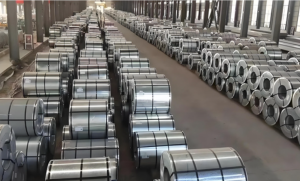
Transformer efficiency is not determined solely by the grade of CRGO steel or the lamination design. Equally critical is the precision of every single cut. Even a minor deviation in size or burr thickness can create uneven gaps, leading to higher core losses, audible noise, and unwanted vibration. Since transformers are designed to run continuously for decades, dimensional accuracy becomes a foundation for long-term stability and reliability.
How Precision Directly Impacts Noise and Vibration
1. Minimizing Air Gaps in the Core
If lamination dimensions are inconsistent, microscopic air gaps appear between sheets. These gaps disrupt the magnetic flux path, raising no-load losses and causing uneven distribution. Accurate cutting ensures tighter stacking, smoother magnetic flow, and quieter operation.
2. Reducing Magnetostrictive Noise
CRGO steel naturally expands and contracts under alternating magnetic fields, a property called magnetostriction. When laminations are uneven, this microscopic movement increases vibration and creates the familiar transformer “hum.” Maintaining consistent dimensions reduces irregular stress, cutting magnetostrictive noise significantly.
3. Enhancing Mechanical Stability
Noise is only one part of the problem. Excessive vibration can loosen core clamping, accelerate wear, and shorten transformer life. Precise thickness control and burr-free edges create a compact, stable stack that resists vibration—even under demanding load conditions.
4. Protecting Insulation Systems
Mechanical stress from vibration eventually damages insulation paper and transformer oil systems. By keeping dimensional tolerances tight, manufacturers reduce strain on insulation, helping extend service life and ensuring consistent performance.
5. Meeting Efficiency and Regulatory Standards
Modern power grids demand not just performance but compliance with strict energy-efficiency regulations, such as BIS and BEE in India. Precision cutting allows transformers to achieve these benchmarks while maintaining noise levels within accepted industry limits.
The DLS CRGO Advantage
At DLS CRGO, precision is engineered into every batch. Our advanced cutting systems ensure high repeatability, tight dimensional tolerances, minimal burr formation, and superior stacking quality. The result is a transformer core that runs quietly, resists vibration, and delivers dependable efficiency for decades.
For manufacturers aiming to build transformers that meet modern efficiency standards while ensuring long-term reliability, precision cutting is not optional—it is essential. And with DLS CRGO, that precision is guaranteed.