Electricity consumption has always been a core consideration in industrial planning. However, the rapid expansion of AI data centers is introducing a very different power usage profile compared to traditional industrial facilities.
While both rely on stable and reliable electricity supply, the way power is consumed — and therefore how transformers are designed and selected — differs significantly.
Understanding these differences is becoming increasingly important for utilities, transformer manufacturers, and material suppliers alike.
Traditional Industrial Power: Variable and Process-Driven
In conventional industrial environments — such as manufacturing plants, steel mills, or processing facilities — electricity demand is typically:
- Process-based (linked to production cycles)
- Intermittent or variable
- Influenced by start-stop operations, shifts, and maintenance schedules
Transformers in these settings often experience fluctuating loads, with periods of partial load or even idle time. As a result, design priorities traditionally focused on:
- Mechanical robustness
- Short-term overload capability
- Cost-performance balance
While efficiency has always mattered, core loss was often a secondary concern compared to operational flexibility.
AI Data Centers: Continuous, High-Density Power Demand
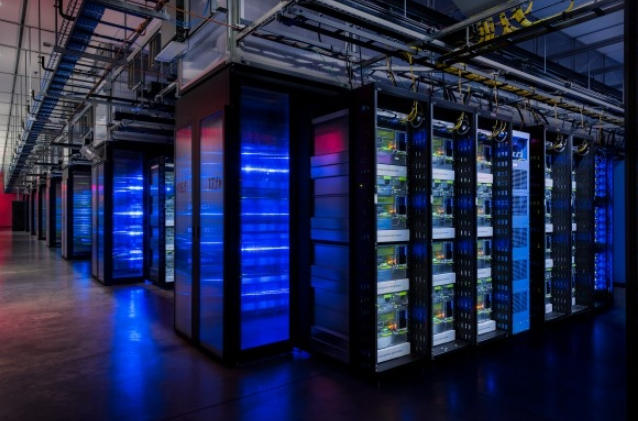
AI data centers operate under a fundamentally different load pattern.
Their power demand is characterized by:
- 24/7 continuous operation
- High load stability, often close to rated capacity
- Minimal tolerance for voltage fluctuation or downtime
Unlike industrial facilities, AI data centers rarely experience prolonged low-load periods. From the transformer’s perspective, this means:
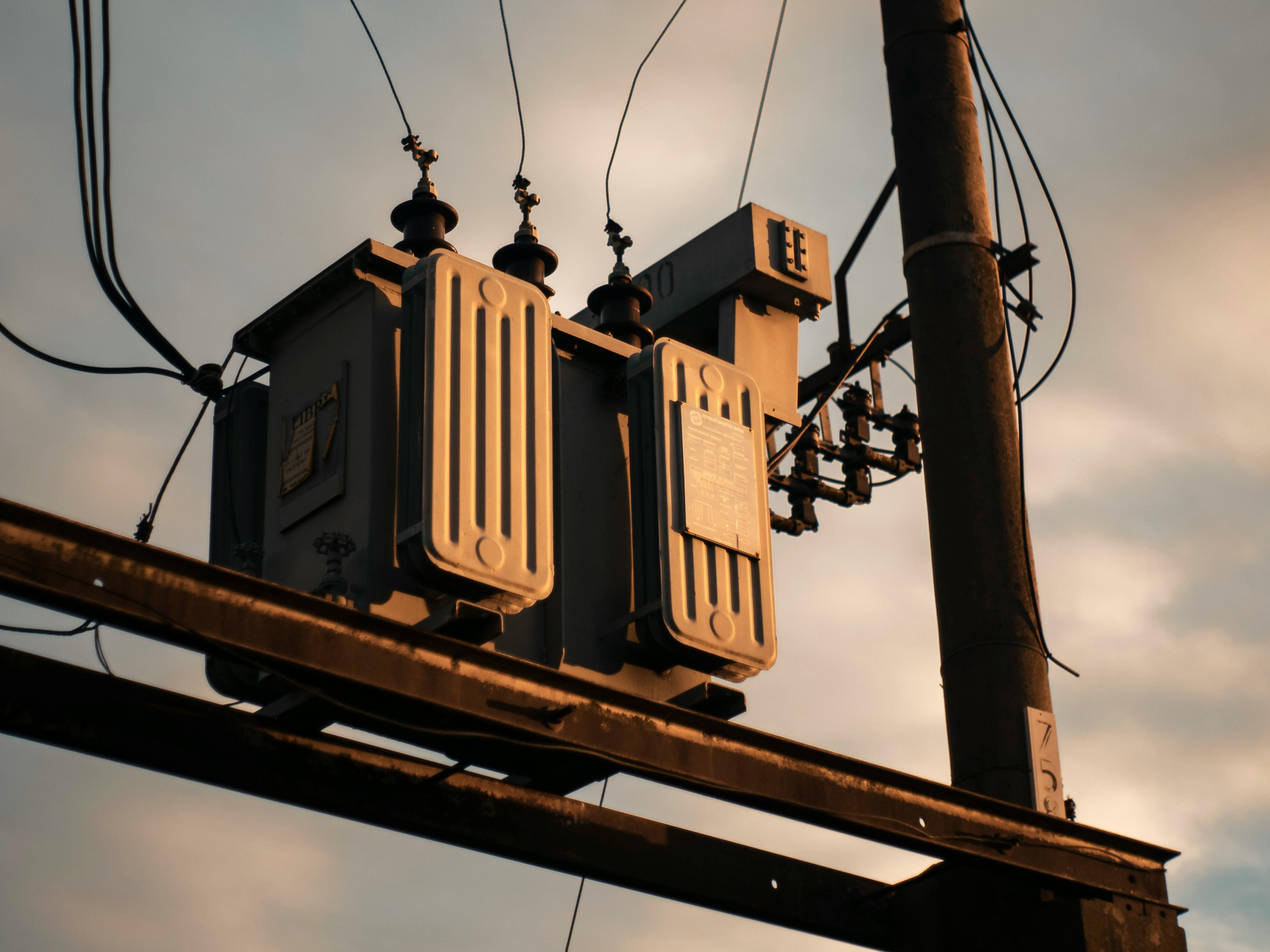
The transformer is almost always “on,” and its losses are constantly accumulating.
This single difference reshapes how transformer efficiency is evaluated.
Why Core Loss Becomes a Primary Metric
In continuous-load environments, no-load loss (core loss) is not diluted by downtime. Instead, it becomes a permanent energy cost over the transformer’s entire lifecycle.
Compared to traditional industrial applications, AI data center transformers place greater emphasis on:
- Lower core loss at rated flux density
- Reduced heat generation under continuous operation
- Long-term efficiency rather than short-term performance
Even small improvements in core loss can result in significant energy savings when multiplied across years of uninterrupted service.
Material Selection Under Different Load Profiles
Because of these operating differences, the electrical steel used in transformer cores is evaluated differently.
Traditional Industrial Transformers
- Broader tolerance for loss variation
- Less sensitivity to small efficiency differences
- Often optimized for cost and availability
Data Center Transformers
- Tighter control of loss values
- Greater attention to thickness, flatness, and consistency
- Preference for low-loss CRGO grades, especially thinner gauges
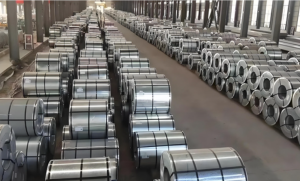
In practice, thinner materials such as 0.23 mm CRGO are increasingly favored in high-efficiency designs, as they help reduce eddy current losses under continuous excitation.
Grades within the 23Q and 27Q series, commonly applied in distribution and power transformers, are often selected based not just on nominal grade names, but on their actual P1.7/50 performance stability and processing quality.
DLS CRGO Standard dimensions of products
| Type | Grade | Thickness(mm) | Density(kg/dm³) | P1.7/50 | B8 |
|---|---|---|---|---|---|
| Common type | 23Q85 | 0.23 | 7.65 | 0.800-0.850 | 1.85-1.89 |
| 23Q90 | 0.850-0.900 | 1.85-1.89 | |||
| 23Q95 | 0.890-0.910 | 1.85-1.89 | |||
| 23Q100 | 0.900-0.970 | 1.85-1.89 | |||
| 23Q105 | 0.971-1.020 | 1.85-1.89 | |||
| 23Q110 | 1.021-1.050 | 1.85-1.89 | |||
| 27Q100 | 0.27 | 7.65 | 0.900-0.970 | 1.85-1.89 | |
| 27Q105 | 0.971-1.020 | 1.85-1.89 | |||
| 27Q110 | 1.021-1.050 | 1.85-1.89 | |||
| 27Q120 | 1.051-1.150 | 1.85-1.89 |
Thermal Management and Long-Term Stability
Another key difference lies in thermal behavior.
In industrial settings, intermittent loading allows transformers to cool naturally during low-demand periods. In contrast, AI data center transformers:
- Operate at steady thermal states
- Require predictable heat generation
- Must support long-term insulation life under constant stress
Lower core loss contributes directly to improved thermal margins, which in turn supports higher system reliability and reduced maintenance requirements.
A Shift in How Efficiency Is Viewed
For decades, transformer efficiency was often treated as a compliance issue — something checked against standards and then largely forgotten.
AI data centers are changing that mindset.
Efficiency is now tied to:
- Operating cost over decades
- Sustainability and carbon reduction goals
- Power infrastructure scalability
This shift brings transformer materials — particularly electrical steel — into sharper focus as strategic components rather than commodity inputs.
Conclusion
AI data centers and traditional industrial facilities may rely on the same electrical grid, but their power consumption patterns are fundamentally different. These differences are driving a reassessment of transformer design priorities, with core loss, material consistency, and long-term efficiency taking center stage.
As high-density, continuous-load applications continue to grow, understanding how load profiles influence transformer requirements will be essential for building resilient and efficient power infrastructure.
DLS CRGO provides grain-oriented electrical steel solutions engineered to support stable, low-loss transformer core performance in both traditional industrial and high-duty-cycle power applications.