Table of Contents
- The Booming Demand for Silicon Steel Driven by U.S. Grid Expansion
- The Structural Shortage in Domestic Supply and the Widening Gap
- Technical Specifications for High-Grade Silicon Steel in Ultra-High Voltage Applications
- Leveraging Chinese Industrial Advantages to Capture the U.S. Market
- Strategic Roadmap for Silicon Steel Enterprises in the New Global Era
1. The Booming Demand for Silicon Steel Driven by U.S. Grid Expansion
In recent years, the U.S. power system has faced three major challenges. These include aging infrastructure, surging electricity demand, and the urgent need to switch to cleaner energy. Grid expansion and upgrades have become essential to address these issues.
1.1 The $75 Billion U.S. Grid Expansion Plan
In 2026, the Federal Energy Regulatory Commission (FERC) approved a landmark transmission expansion plan. This plan comes from three major U.S. grid organizations: NAERC, WECC, and ERCOT. It totals $75 billion, making it the largest grid project in U.S. history.
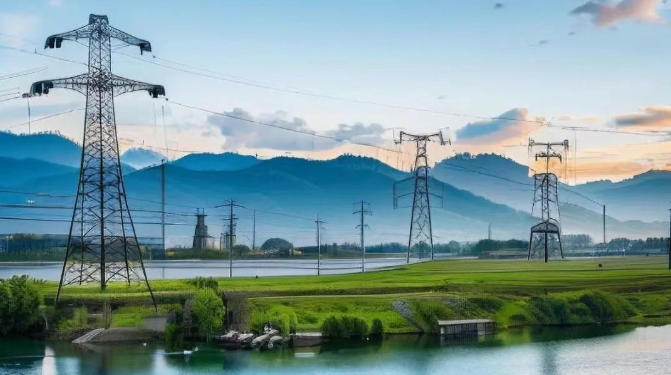
The project focuses on building 765kV ultra-high voltage (UHV) lines. These lines will reach 10,000 miles in total—four times the current length. They will cover key economic and energy-rich areas across 48 U.S. states.
1.2 The Role of UHV Lines and AI Power Corridors
Official plans state these UHV lines will connect wind and solar farms in the U.S. heartland to major cities on the East and West Coasts. This will fix the imbalance between where energy is made and where it is used. It will also make the grid more stable and less prone to blackouts from extreme weather.
Additionally, Texas is launching a $10 billion “AI Power Corridor” project. This project will support the fast-growing AI data center industry. It will have dedicated power lines that can handle 24 gigawatts of load.
Tech giants like Amazon, Google, and Microsoft are expanding data centers in Texas. These centers need constant, high-density power. This demand is pushing up the need for power transformers rapidly.
1.3 Silicon Steel Demand from Transformers
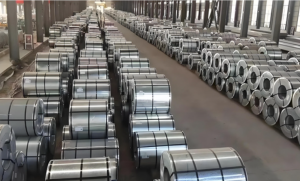
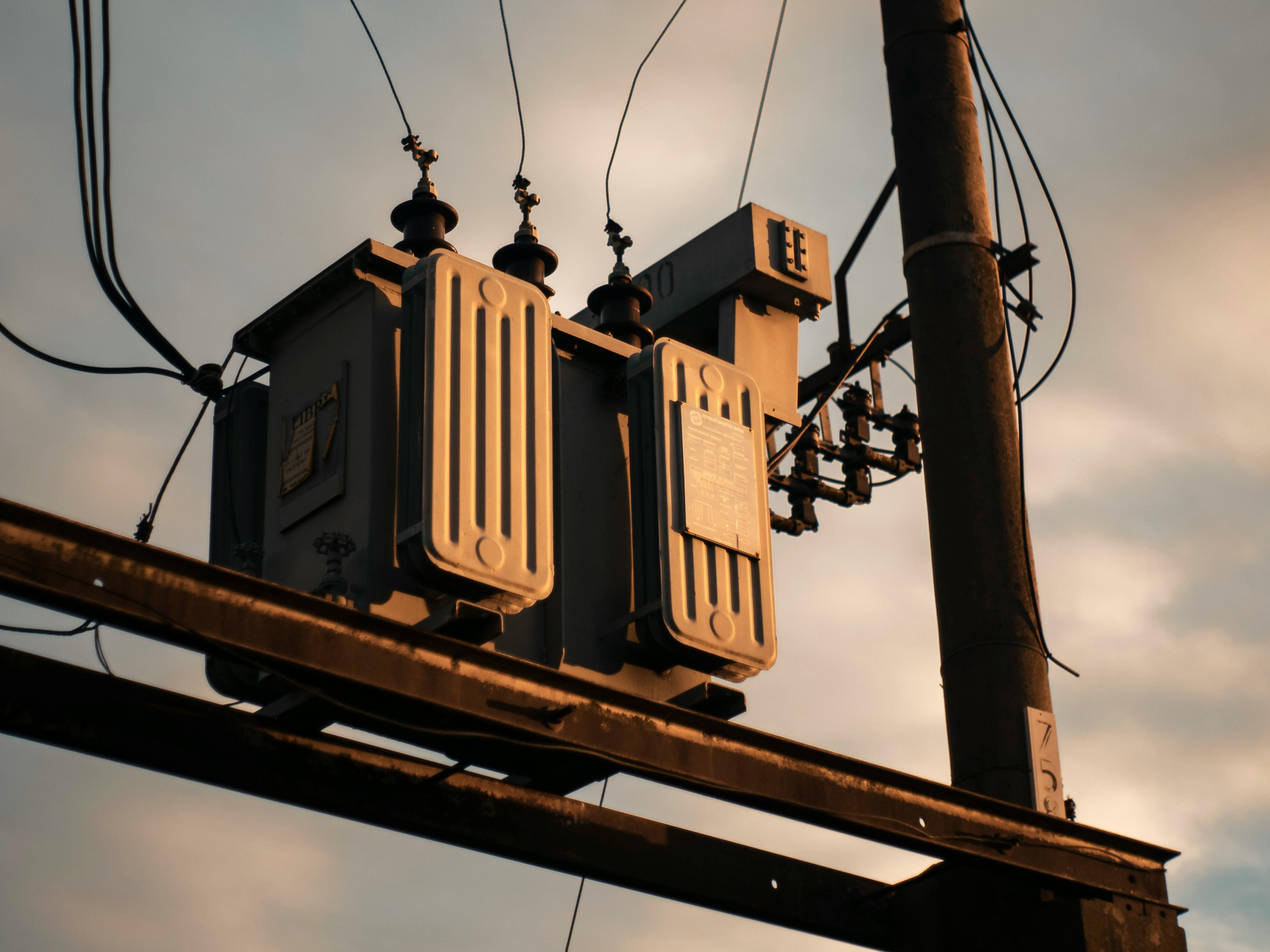
Transformers are the heart of both grid upgrades and data center infrastructure. Grain-oriented silicon steel (CRGO) is the key material in transformers. It directly affects a transformer’s efficiency, power loss, stability, and lifespan.
Industry estimates show one 765kV UHV transformer needs 50 to 80 tons of CRGO. The $75 billion grid project will add 800 to 1,000 new UHV transformers. This alone will create demand for 40,000 to 80,000 tons of high-grade CRGO.
When adding transformers for data centers and old grid replacements, U.S. CRGO demand will reach 120,000 to 150,000 tons per year by 2030. This is a 60% increase from today and a huge opportunity for global silicon steel suppliers.
2. The Structural Shortage in Domestic Supply and the Widening Gap
The growing demand for CRGO from U.S. grid expansion is running into domestic supply problems. This imbalance could slow down grid modernization efforts.
2.1 The Hollowing Out of U.S. Transformer Manufacturing
Over the past few decades, many U.S. power equipment manufacturing jobs have moved overseas. Only core R&D and final assembly remain in the country. This has left the U.S. with very little domestic transformer production capacity.
Today, 80% of U.S. transformers are imported. Domestic production only meets 20% of demand, and there is almost no ability to make UHV transformers locally.
2.2 Long Delivery Times for Transformers
The Energy Power Devices Manufacturers Association (EPMI) reports only a few U.S. companies can make large transformers. These include GE and Westinghouse. Their capacity is limited, and production takes a long time.
As a result, transformer delivery times have jumped from 50 weeks to over 127 weeks. Some urgent projects wait up to 30 months for transformers.
2.3 The Severe Shortage of Domestic CRGO
The situation is even worse for CRGO. Only AK Steel (a subsidiary of U.S. Steel) makes CRGO in the U.S. It only produces mid-to-low grade CRGO, with an annual capacity of 30,000 to 40,000 tons.
This is not enough for UHV transformers or data center transformers. The U.S. imports over 90% of its CRGO, mostly from Japan and Germany. These imports have long delivery times and unstable prices, making the shortage worse.
2.4 The Growing Supply-Demand Gap
The U.S. grid is also aging quickly. FERC statistics show grid equipment averages over 40 years old, and transformers average 35 years old. Over 38% of transformers are past their useful life.
Replacing these old transformers will add more demand for CRGO. At the same time, manufacturing reshoring and AI growth are pushing power demand higher.
Industry analysis shows U.S. transformer demand will hit 12,000 MVA in 2026. Domestic supply will only reach 8,400 MVA, leaving a 30% gap. CRGO demand will be 120,000 tons, but domestic supply will only cover 35,000 tons—a 70% gap.
Expanding U.S. CRGO production is hard. It requires high technical skills and large investments. There is also a shortage of skilled workers to operate CRGO factories. This means the U.S. must rely on foreign suppliers, creating a big opportunity for Chinese silicon steel companies.
3. Technical Specifications for High-Grade Silicon Steel in Ultra-High Voltage Applications
The $75 billion grid expansion focuses on 765kV UHV lines. These transformers work in harsher conditions than regular transformers. They need high-grade CRGO to meet strict safety and efficiency standards.
3.1 Key Technical Requirements for UHV Transformers
Transformers operating at 765kV run continuously at high voltage and capacity. They need CRGO with four key properties:
First, high magnetic permeability. This property determines a transformer’s size and efficiency. CRGO with permeability above 1.90T can increase capacity without making the transformer bigger. It also reduces energy loss.
Second, low no-load loss. UHV transformers run nonstop, so no-load loss wastes a lot of energy. High-grade CRGO must have no-load losses below 0.8 W/kg to save energy.
Third, high mechanical strength. Transformers generate strong electromagnetic forces. CRGO must be strong enough to resist these forces and avoid damage.
Fourth, high voltage insulation. In UHV environments, CRGO coatings must prevent electrical breakdown. This ensures the transformer stays safe and reliable.
3.2 Special Requirements for Data Center Transformers
Data center transformers have unique needs. They handle high-density, 24/7 power with frequent load changes. They need CRGO that stays stable during these changes to reduce energy loss.
Data centers also have limited space and noise rules. High-grade CRGO helps make transformers smaller and quieter, fitting perfectly in these facilities.
3.3 Technical Barriers to High-Grade CRGO Production
Only a few global companies make high-grade CRGO for UHV transformers. The production process is complex, with steps like hot rolling, cold rolling, annealing, and coating.
Each step needs precise control. For example, annealing requires exact temperature and cooling rates to form the right grain structure. The coating also matters, as it protects the CRGO and extends transformer life.
Meeting these technical standards is critical for silicon steel suppliers. It is the main barrier to entering the high-value U.S. market. Suppliers must prove they can make high-quality CRGO in large quantities.
4. Leveraging Chinese Industrial Advantages to Capture the U.S. Market
The U.S. CRGO shortage and strict technical standards create a historic opportunity for Chinese silicon steel enterprises. After decades of development, China has become a global leader in silicon steel production.
4.1 Chinese CRGO: Technological Superiority
Chinese companies have broken the technical monopoly once held by Japan and Germany. They now make high-grade CRGO with permeability over 1.95T and no-load losses below 0.75 W/kg.
These specs meet or exceed U.S. requirements for UHV and data center transformers. Chinese manufacturers have also improved production processes to ensure consistent quality. Many have earned international certifications and gained trust from global transformer makers.
4.2 Unmatched Production Capacity
China accounts for over 70% of global power equipment-related silicon steel capacity. Its annual CRGO output exceeds 1 million tons, with high-grade production over 400,000 tons.
Chinese companies have complete supply chains, from raw materials to delivery. This allows them to respond quickly to customer needs and adjust production as required.
4.3 Faster Delivery and Lower Costs
Long delivery times are a major problem for U.S. transformer makers. Chinese suppliers can deliver CRGO in 4 to 8 weeks, much faster than the 12 to 16 weeks from U.S. and European suppliers.
China also has a 20-30% cost advantage for high-grade CRGO. This comes from its complete industrial chain and large production scale. U.S. buyers can get high-quality CRGO at a lower price.
4.4 DLS CRGO: A Trusted Partner for the U.S. Market
DLS CRGO is a specialized CRGO enterprise with years of experience. We focus on R&D for UHV and high-capacity transformer materials. We continuously improve product performance to meet U.S. technical standards.
Our high-grade CRGO offers high permeability, low loss, strong mechanical strength, and stable insulation. We can also provide custom solutions for specific customer needs.
DLS CRGO has a strict quality control system. We use advanced equipment to test products from raw materials to delivery. Our global logistics network ensures fast delivery to U.S. customers.
We also offer full technical support and after-sales service. With our technical adaptability, stable capacity, fast delivery, and cost-effectiveness, DLS CRGO is a reliable partner for U.S. grid expansion and AI power projects.
5. Strategic Roadmap for Silicon Steel Enterprises in the New Global Era
The U.S. $75 billion grid expansion starts a long period of growing demand for high-grade CRGO. For Chinese silicon steel companies, this is a chance to expand globally and move up the industry value chain.
5.1 Invest in R&D for High-End Products
Grid development and AI growth will push up technical requirements for silicon steel. Future demand will focus on low-loss, high-permeability, and ultra-thin CRGO.
Enterprises must invest more in R&D. They should focus on core technologies like ultra-thin CRGO and nano-coated CRGO. This will improve product value and keep them ahead of competitors.
5.2 Optimize Global Supply Chains
To serve the U.S. market well, silicon steel companies should partner with local transformer makers and logistics providers. Local supply chain nodes will reduce delivery times and costs.
Companies should also expand to other global markets. This will reduce risks and build a strong global presence.
5.3 Build Strong Brands and Collaborate
A strong global brand is key to long-term success. Companies should promote themselves as reliable, efficient, and technologically advanced partners.
They should also build long-term relationships with downstream partners. This includes transformer makers and grid operators. Working together will help them enter the market deeper and achieve mutual success.
The U.S. grid expansion is a key moment for the global energy industry. Chinese silicon steel companies have the advantages to seize this opportunity. DLS CRGO will continue to improve products and services. We will work with global partners to embrace this boom and support the global energy transition.