Table of Contents
- Introduction
- What Are Rectangular Transformer Laminations
- Why They Dominate Distribution Transformers
- Core Loss Mechanism and Engineering Logic
- Manufacturing Precision: The Real Performance Driver
- Typical Problems in Low-Quality Laminations
- How DLS CRGO Ensures High Performance
- Engineering Trends and Future Outlook
- Key Takeaways
- FAQ
1. Introduction
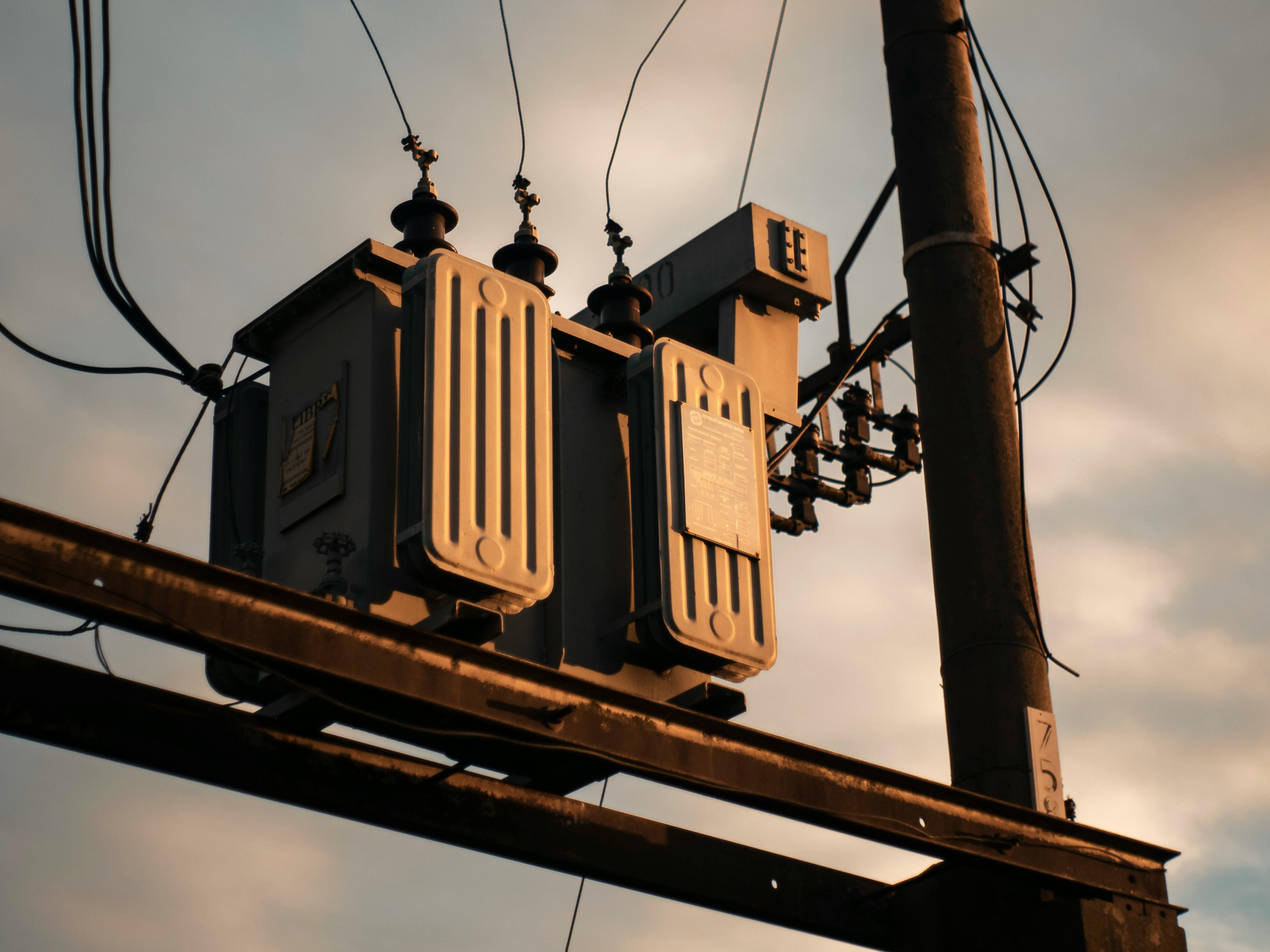
In modern power systems, distribution transformers represent the final and most widely deployed link between electricity generation and end users. Unlike large transmission transformers, these units operate continuously—often 24/7—for decades in outdoor and demanding environments.
From residential neighborhoods to industrial parks, their performance directly affects power stability, energy efficiency, and long-term operating costs.
At the core of these transformers lies a component that is often overlooked but fundamentally critical: rectangular transformer laminations made from CRGO (Cold Rolled Grain Oriented) silicon steel.
While innovations in smart grids and high-voltage transmission attract attention, it is the quality of these laminations that determines real-world transformer efficiency.
2. What Are Rectangular Transformer Laminations
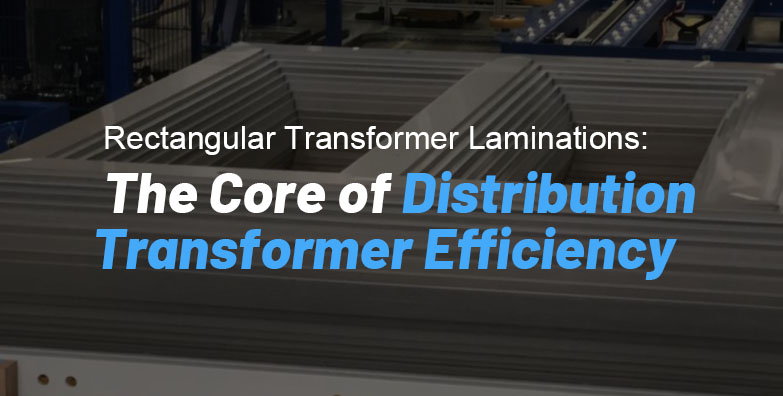
Rectangular transformer laminations are precision-cut sheets of CRGO electrical steel, shaped into straight-edged geometries and stacked together to form the transformer core.
Instead of using a solid block of metal, the core is built from multiple thin insulated layers. This design serves several key purposes:
- Reduces eddy current losses
- Controls hysteresis losses
- Improves magnetic flux efficiency
- Enhances thermal performance
Each lamination is coated with an insulating layer, ensuring electrical isolation between sheets.
This layered structure is the foundation of modern transformer efficiency.
3. Why Rectangular Laminations Dominate Distribution Transformers
3.1 Standardization and Scalability
Distribution transformers are typically mass-produced with standardized power ratings.
Rectangular laminations enable:
- Efficient E-I core assembly
- Step-lap core optimization
- High-volume manufacturing compatibility
This makes them ideal for utility-scale deployment.
3.2 Balanced Performance vs Cost
Compared to more complex core geometries, rectangular laminations offer:
- Lower production cost
- High material utilization
- Proven reliability
This balance is essential in distribution networks where millions of units are deployed.
3.3 Mechanical Stability
Their straight-edge geometry allows:
- Tight stacking
- Reduced vibration
- Improved structural integrity
This directly contributes to longer service life and lower maintenance requirements.
3.4 Magnetic Efficiency
CRGO steel used in laminations features:
- High permeability
- Low core loss
- Strong directional magnetic properties
These characteristics ensure efficient energy transfer with minimal loss.
4. Core Loss Mechanism and Engineering Logic
Understanding transformer laminations requires understanding core loss physics.
4.1 Eddy Current Loss
When magnetic flux changes, circulating currents form within the steel.
Laminations reduce this by:
- Breaking conductive paths
- Increasing resistance between layers
Thinner laminations = lower eddy current loss
4.2 Hysteresis Loss
This is caused by repeated magnetization cycles.
CRGO steel minimizes this through:
- Grain orientation
- Controlled domain structure
4.3 Air Gap and Stacking Factor
Even microscopic gaps between laminations increase magnetic resistance.
Precision manufacturing ensures:
- Tight stacking
- High stacking factor
- Uniform flux distribution
5. Manufacturing Precision: The Real Performance Driver
While the concept of laminations is simple, performance depends entirely on manufacturing quality.
Key parameters include:
- Thickness tolerance
- Burr height
- Coating integrity
- Flatness
- Dimensional accuracy
Even small deviations can lead to:
- Increased no-load loss
- Local overheating
- Reduced efficiency
- Noise and vibration
In long-life assets like transformers, these inefficiencies accumulate significantly over time.
6. Typical Problems in Low-Quality Laminations
In real-world procurement, many issues arise from poor lamination quality:
6.1 Excessive Burr
- Damages insulation coating
- Causes short circuits between layers
6.2 Inconsistent Thickness
- Leads to uneven stacking
- Increases core loss
6.3 Poor Coating
- Reduces insulation resistance
- Accelerates aging
6.4 Dimensional Deviation
- Slows assembly
- Causes core misalignment
6.5 Surface Damage
- Impacts magnetic domain structure
- Reduces efficiency
7. How DLS CRGO Delivers High-Performance Rectangular Laminations
As a specialized supplier in CRGO materials and processing, DLS CRGO focuses on delivering precision-driven transformer core solutions.
7.1 Precision Cutting Technology
Advanced cutting systems ensure:
- Tight dimensional tolerance
- Clean edge profiles
- Reduced air gaps
7.2 Ultra-Low Burr Control
Strict process control minimizes burr height, protecting:
- Insulation coating
- Stacking integrity
7.3 Coating Protection
Careful handling and processing maintain coating integrity, ensuring:
- Electrical insulation
- Long-term reliability
7.4 Batch Consistency
Uniform quality across production batches allows OEMs to achieve:
- Stable performance
- Predictable efficiency
7.5 Integrated Supply Capability
DLS CRGO supports full transformer core requirements, including:
- CRGO slit coils
- Rectangular laminations
- Step-lap laminations
- Core assembly solutions
This reduces supply chain complexity and improves project efficiency.
8. Engineering Trends and Future Outlook
The demand for high-efficiency transformers is increasing due to:
- Energy efficiency regulations
- Smart grid expansion
- Renewable energy integration
Future trends include:
- Lower core loss CRGO grades
- Domain-refined materials
- Thinner laminations (0.23mm / 0.20mm)
- Improved coating technologies
In this context, lamination quality becomes even more critical.
9. Key Takeaways
- Rectangular laminations are the backbone of distribution transformers
- CRGO steel enables high magnetic efficiency
- Manufacturing precision directly impacts performance
- Poor quality laminations lead to long-term energy loss
- DLS CRGO focuses on consistency, precision, and reliability
10. FAQ
Q1: Why not use solid steel cores?
Solid cores produce high eddy current losses, making them inefficient. Laminations solve this problem.
Q2: What thickness is commonly used?
Typical thickness includes 0.23mm, 0.27mm, and 0.30mm depending on efficiency requirements.
Q3: What is the most critical quality factor?
Burr control and coating integrity are among the most critical.
Q4: How do laminations affect transformer lifespan?
Better laminations reduce heat and stress, significantly extending service life.
Q5: Are rectangular laminations still relevant today?
Yes. They remain the most widely used core structure for distribution transformers globally.